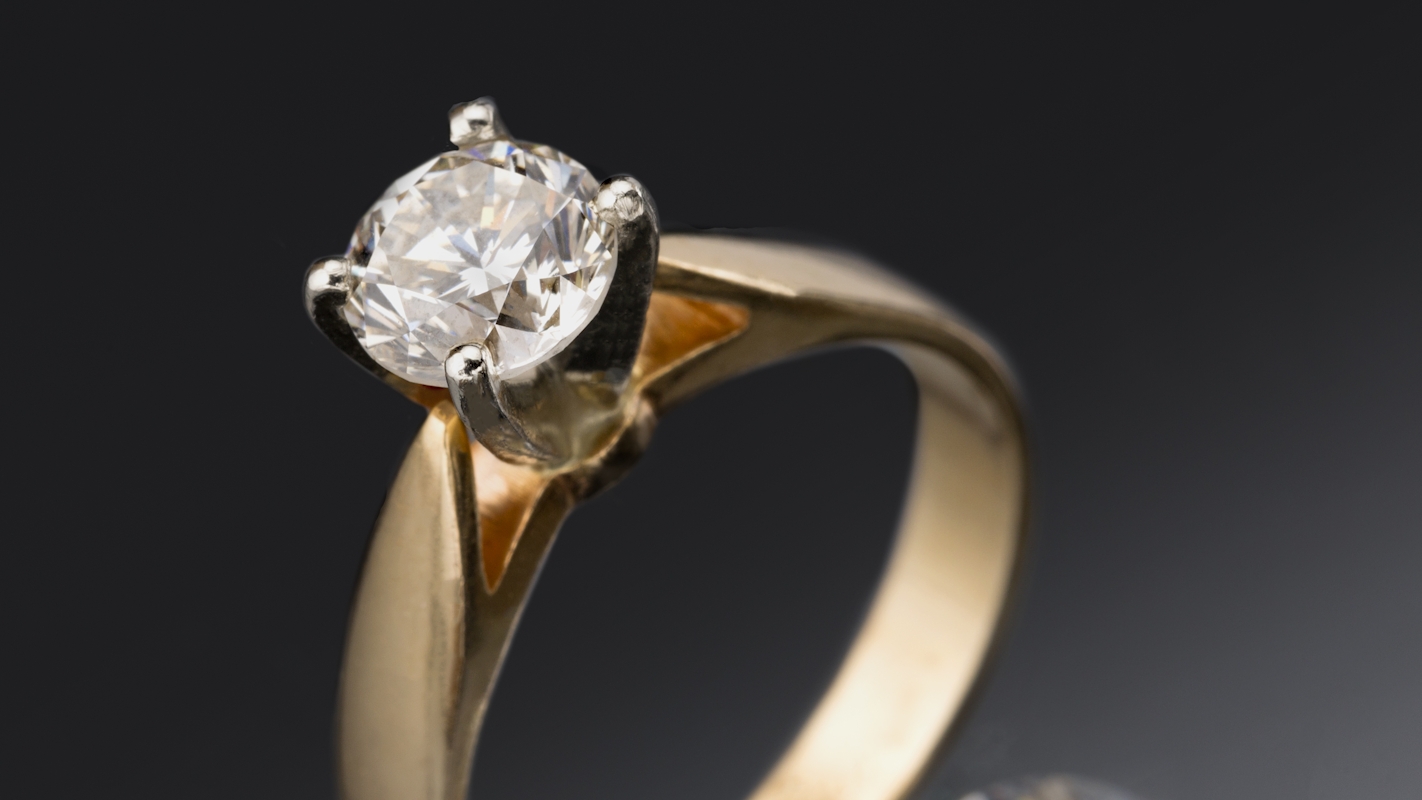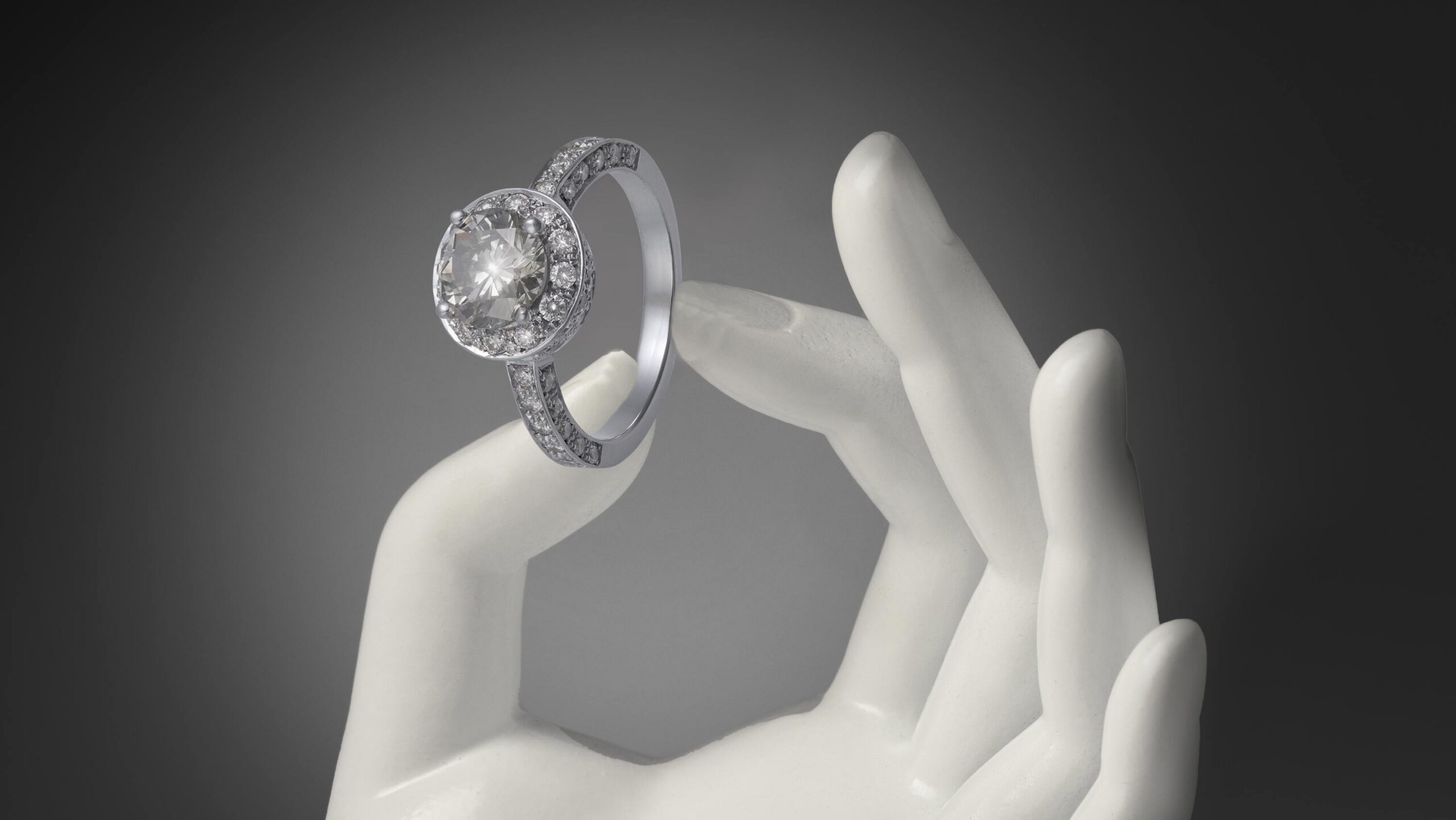
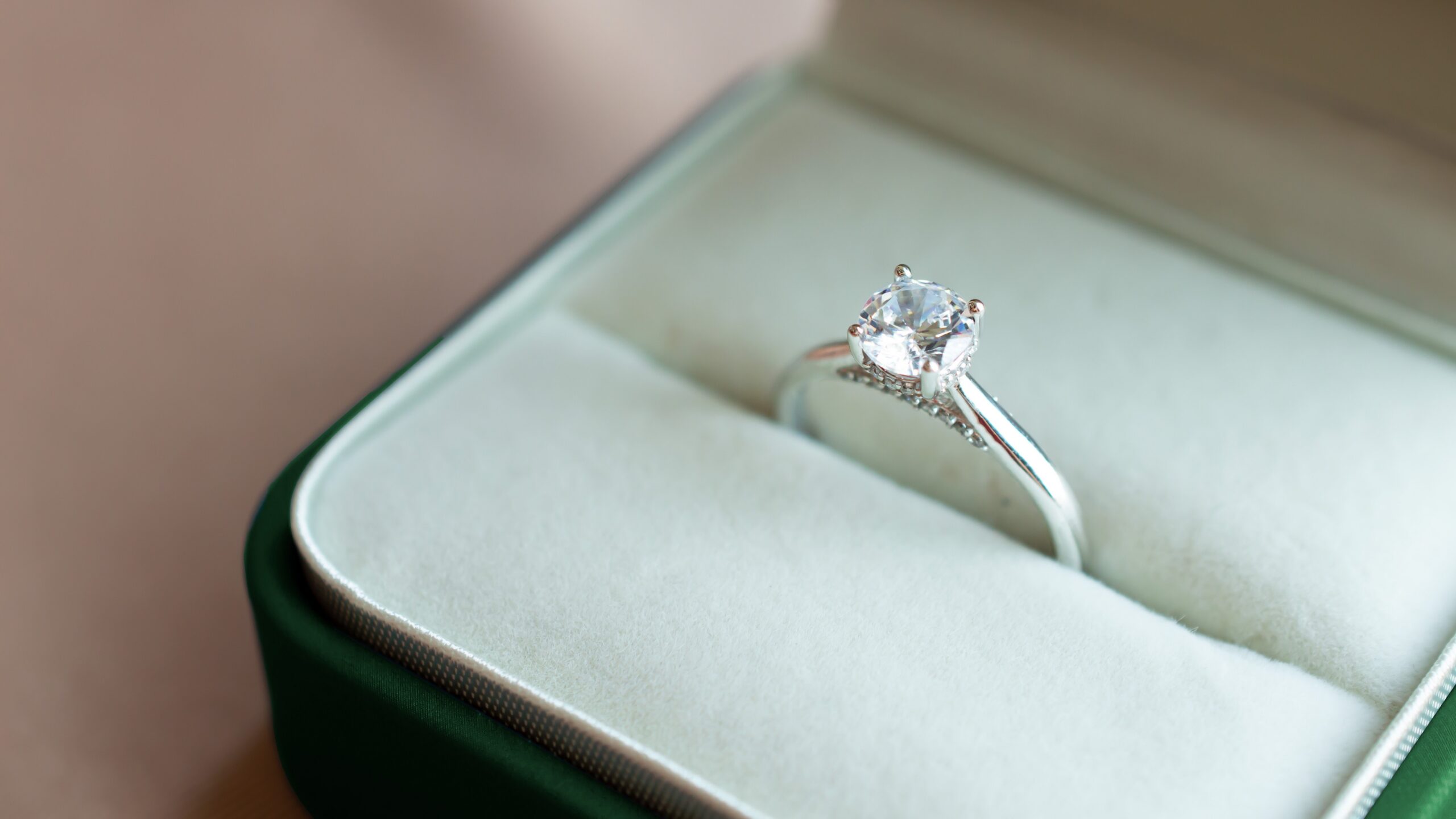
Most people dream of owning a “perfect” diamond. When they imagine a diamond, they picture a flawless, ice-white stone that catches the light from across the room. But when you step into the real world of diamond buying and selling, you quickly learn that “perfection” is both a scientific rarity and a major marketing illusion.
In this third installment of our diamond grading series, we are exploring the next two of the crucial 4 C’s: Clarity and Color. We will explain what these grades actually mean, how they affect a diamond’s value, and how a few industry secrets can help you save thousands of dollars without sacrificing any of the beauty.
Clarity: The Story of Nature’s Fingerprints
All natural diamonds contain tiny flaws. Because diamonds are formed deep within the earth under unimaginable heat and pressure, they almost always carry “birthmarks” from their creation.
When gemologists evaluate a diamond’s Clarity, they are assessing these flaws under 10x magnification. These flaws are divided into two categories:
- Blemishes: Flaws found on the outer surface of the diamond, such as scratches, pits, or tiny chips.
- Inclusions: Flaws locked inside the diamond, such as microscopic bubbles, cracks, or flecks of other minerals trapped during the diamond’s growth.
Because flawless natural diamonds are incredibly rare, they are also incredibly expensive. To standardize how these characteristics are evaluated, the gemological world uses a strict scale:
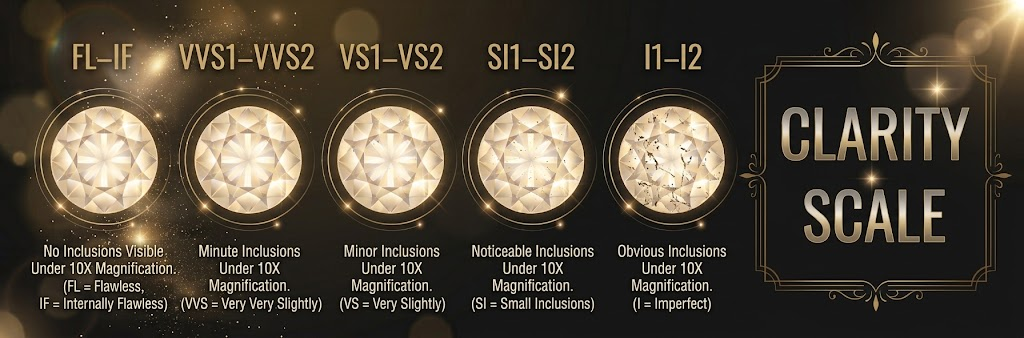
- FL & IF (Flawless/Internally Flawless): No inclusions or blemishes visible under 10x magnification. Extremely rare and highly priced.
- VVS1 & VVS2 (Very, Very Slightly Included): Minute inclusions that are extremely difficult for even a skilled gemologist to see under 10x magnification.
- VS1 & VS2 (Very Slightly Included): Minor inclusions that are visible under 10x magnification but are still considered very minor.
- SI1 & SI2 (Slightly Included): Noticeable inclusions under magnification that might begin to affect the diamond’s light performance.
- I1, I2 & I3 (Imperfect): Obvious inclusions that can be seen easily under magnification and sometimes even with the naked eye. These can threaten the structural integrity of the stone.
The Clarity Secret: “Eye-Clean” Diamonds
Here is a secret that professional diamond dealers know: Inclusions in the Flawless (FL) through Very Slight (VS) grades are completely invisible to the naked eye.
If you are buying a diamond, paying a premium for a “Flawless” or “VVS” stone means you are paying for perfection that you can only see through a powerful microscope. A “VS1” or “VS2” diamond looks completely identical to the naked eye but can save you 20% to 40% on the price, allowing you to invest that money into a better Cut or a larger Carat weight instead!
Color: The Beauty of Absolute “Nothing”
When we think of classic diamonds, we think of them as being as clear as glass or pure white. But in gemology, diamond Color is graded not on what color is present, but on the absence of color.
The industry standard scale ranges from D to Z:
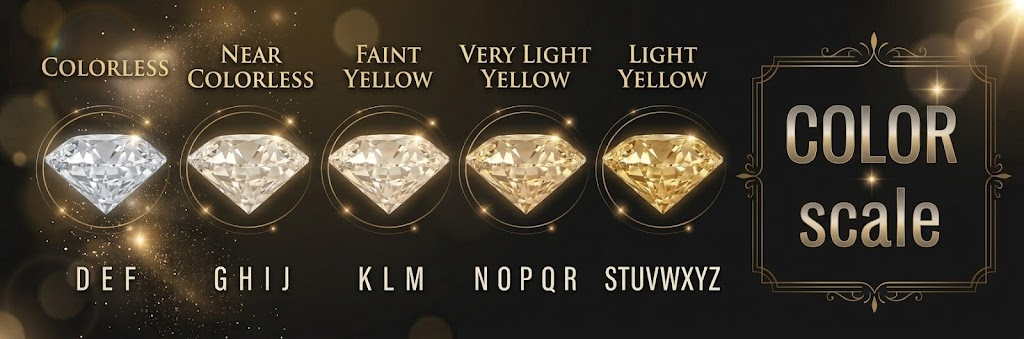
- D, E, F (Colorless): The highest grade. These diamonds are chemically pure and have absolutely no color tinting. They are extremely rare and command the highest prices.
- G, H, I, J (Near Colorless): These diamonds appear colorless to the untrained eye unless placed face-down next to a pure colorless stone under specific lighting. They offer the best value for money.
- K to M (Faint Yellow): A slight warm yellow or brownish tint is visible.
- N to R (Very Light Yellow) & S to Z (Light Yellow): Clear yellow or brown tinting is easily visible to the naked eye.
The Cut & Color Connection
Why does colorlessness matter? The less color a diamond has, the more it emphasizes the spectacular brilliance created by the diamond’s cut. A colorless diamond acts like a perfect prism, reflecting pure white light and fire back to your eye. If a diamond has a yellow tint, that tint can absorb some of the light and dull the sparkle slightly.
The Colorful Exception: “Fancy” Diamonds
Naturally colored diamonds are the major exception to the D-to-Z rule. If a diamond is naturally saturated with intense colors like blue, pink, green, or vivid yellow, it is classified as a “fancy” colored diamond. Because these are extraordinarily rare in nature, they do not follow the standard pricing scale and can be some of the most expensive and sought-after gems on earth.
Trust the Certificate, Trust Your Eyes
Because these microscopic clarity details and subtle color shades can swing a diamond’s value by thousands of dollars, you should never buy a diamond based on word-of-mouth alone. A GIA (Gemological Institute of America) or AGS (American Gem Society) certificate is your shield, confirming exactly what clarity and color grades you are paying for.
If you are planning to sell diamond jewelry that you already own, understanding how a reputable buyer evaluates these features is crucial. At Seattle Gold, we believe in absolute transparency and education, which is why we test and weigh all items right in front of you.
Ready to get an honest, transparent evaluation of your jewelry? Give Seattle Gold a call today at (206) 517-4653 to speak with a diamond specialist or stop by our Crown Hill store!
In Part 4 of our series, we’ll shift from the earth to the laboratory to explore the fascinating, high-pressure science behind synthetic and lab-grown diamonds and why their long-term resale value differs from natural stones!
Explore more of the diamond series:
Part 1: The Anatomy of a Sparkle: Demystifying “Cut” vs “Shape”
Part 2: What is a Carat, Anyway? The Ancient Seed that Weighed an Industry