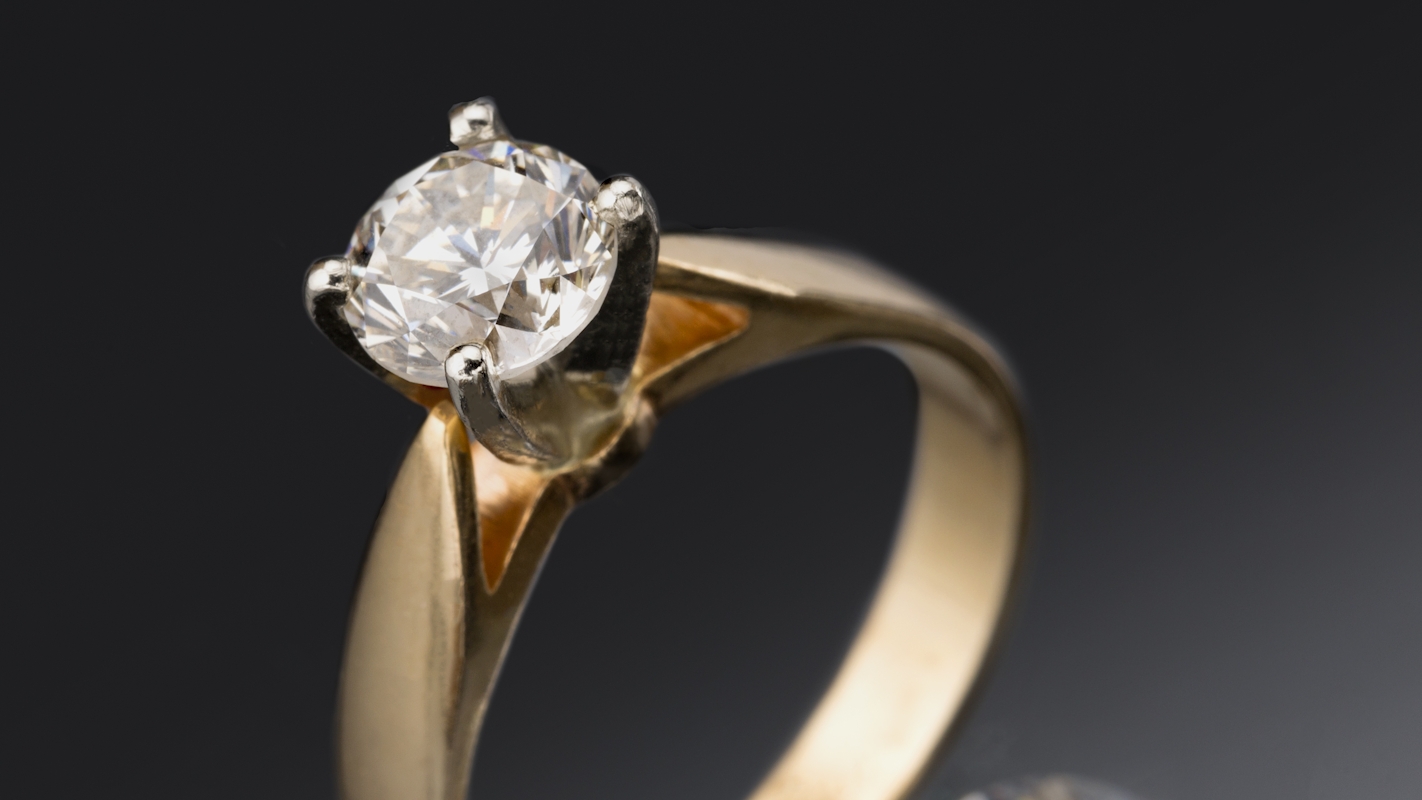
When people talk about diamonds, the word carat is almost always the very first thing that comes up. We hear it in movies, see it in jewelry store windows, and discuss it when planning engagement rings. But what exactly is a carat, and why does a tiny change in this number have such a colossal impact on a diamond’s price tag?
To understand the modern carat, we actually have to travel back in time to the ancient marketplaces of the Mediterranean.
The Seed of an Industry: The History of the Carat
Did you know that the word “carat” has botanical roots? It is derived from the Greek word “carob” – a tree that produces long pods filled with seeds.
In ancient times, before digital scales and high-precision weights existed, merchants needed a reliable way to weigh precious gemstones. They noticed that the seeds of the carob plant had an incredibly uniform weight. Because one carob seed weighed almost exactly the same as another, merchants began using them as counterweights on their balance scales. If a gemstone balanced perfectly against five carob seeds, it was said to weigh “five carats.”
As the diamond trade went global, this ancient system needed to be standardized. Today, the carat system is strictly standardized across the entire world: one carat is fixed at exactly 0.2 grams.
Weight vs Size: They Aren’t Always the Same
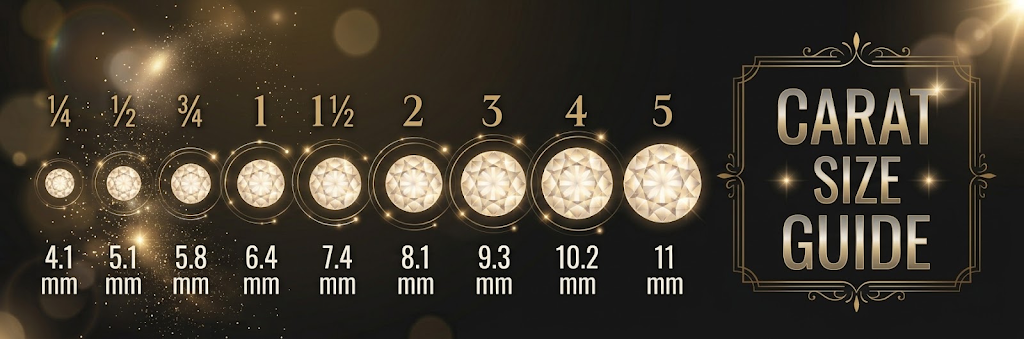
One of the most common misconceptions is that carat measures a diamond’s physical size. In reality, a carat is strictly a unit of weight, not dimensions.
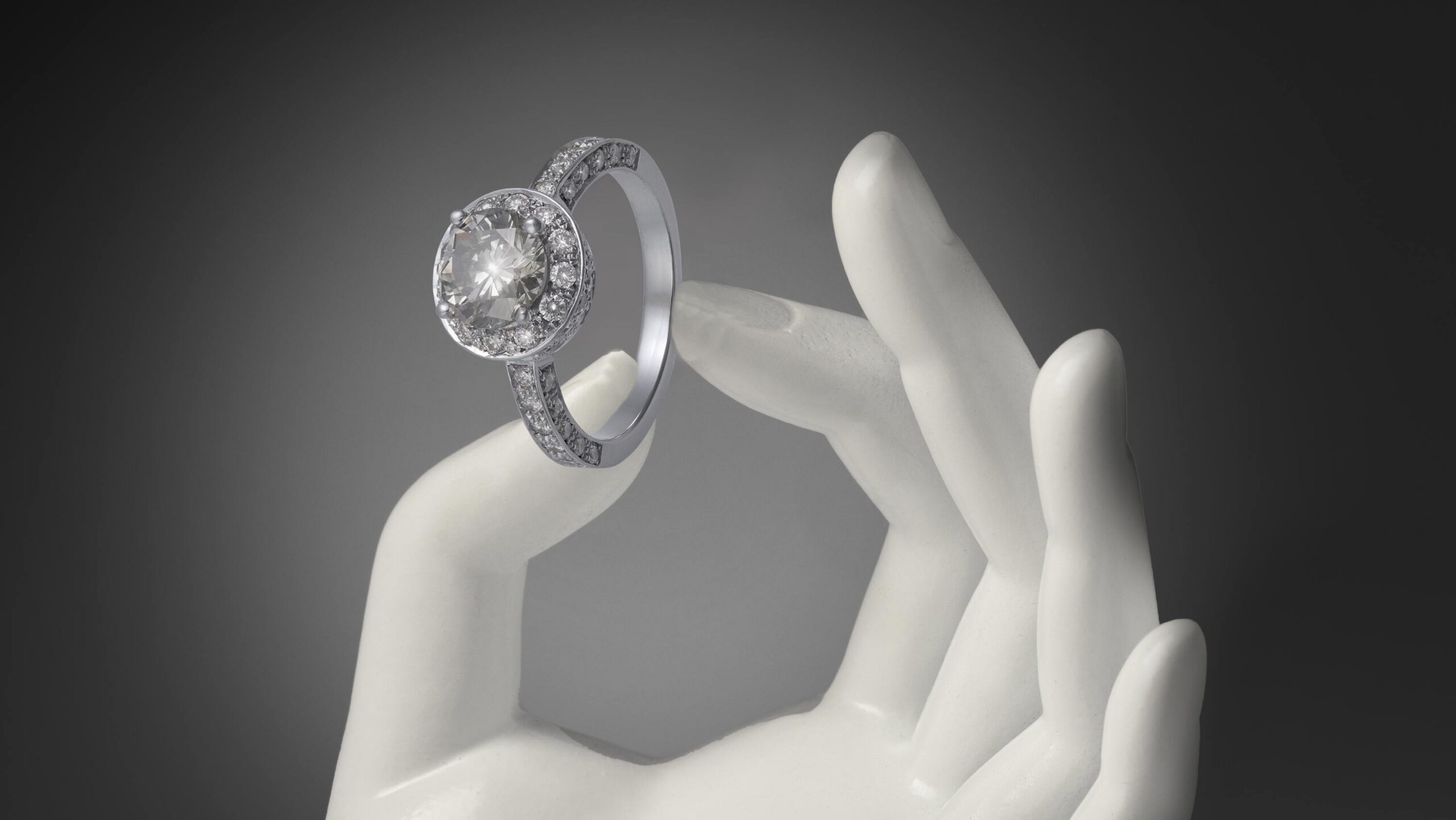
While a higher carat weight generally correlates to a larger-looking diamond. As we discussed in part 1 of this series, the actual visual size depends heavily on two factors: the cut and the shape. Different cuts and diamond shapes distribute their weight differently and how much of the diamond is visible. Remember that a one-carat heart-shaped diamond and a one-carat round diamond weigh exactly the same (0.2 grams), but because of their unique geometry, they won’t look like the exact same size on your finger.
To give you an idea of standard dimensions, a classic round brilliant-cut diamond of 1.0 carat typically measures about 6.4 millimeters in diameter.
The Rare Air: The Exponential Pricing Curve
If you have a 1-carat diamond and a 2-carat diamond of the exact same color, clarity, and cut, you might expect the 2-carat diamond to cost twice as much. In the diamond world, however, math works very differently.
The price of a diamond increases exponentially as you go up in carat weight.
Why? Because large, gem-quality diamond crystals are incredibly rare to find in the earth compared to smaller ones. Because diamonds over one carat are far scarcer, a two-carat diamond is worth significantly more per carat than a one-carat diamond of equal grade. You aren’t just paying for double the weight; you are paying a massive premium for extreme rarity.
This rarity is also reflected in what people typically buy. If you are shopping for an engagement ring, the average size can be a helpful comparison. According to historical industry data from washingtondiamond.com, in 2024 the average size of a center diamond for an engagement ring was 1.8 carats. If you’re looking for more information on your diamond or diamonds in general, you can always visit the Diamond Database (https://www.diamdb.com/).
At Seattle Gold, our evaluation process is completely transparent and designed to walk you through exactly how your diamonds are assessed. Unlike standard pawnshops, when we evaluate diamond jewelry, we follow a precise, tier-based valuation based on the size of your natural, colorless diamonds.
Because these grading factors require specialized testing, we recommend having them evaluated by experienced professionals. At Seattle Gold, our knowledgeable staff are available in our store Monday through Sunday to evaluate your jewelry right in front of you with zero pressure and no obligation.
In Part 3 of our series, we’ll peel back the layers on clarity and color, explain why a “perfect” grade might actually be a waste of your money and how to spot “flawless lies”!
If you missed it, you can read Part 1 of our series “The Anatomy of a Sparkle: Demystifying ‘Cut’ vs ‘Shape'” here.